Course Catalog
Explore our accredited Ontario high school credit courses. Filter by grade level or search for specific subjects to start your journey.
Grade 9
11
Geography of Canada
Explore Canada's diverse physical and human geography, environmental sustainability, and citizenship responsibilities. This course examines Canada's unique geographic features, natural resources, cultural diversity, and connections to the global community while developing geographic literacy and inquiry skills.


Building the Entrepreneurial Mindset
This hands-on, engaging course introduces students to the world of business and entrepreneurship. Students will explore what makes an entrepreneur thrive and develop the essential skills needed to succeed in today's dynamic business environment. They will begin building their own entrepreneurial mindset, learning the importance of taking initiative, adapting to change, finding creative solutions, and understanding financial considerations. The course emphasizes practical application through business software/tools, idea development, prototyping, and presentation skills. It also builds transferable competencies like project management (goal setting, time management, networking), communication, leadership, creativity, critical thinking, and problem-solving.

English (De-streamed)
This course enables students to continue to develop and consolidate the foundational knowledge and skills that they need for reading, writing, and oral and visual communication. Throughout the course, students will continue to enhance their media literacy and critical literacy skills, and to develop and apply transferable skills, including digital literacy. Students will make connections to their lived experiences and to society and increase their understanding of the importance of language and literacy across the curriculum. The course emphasizes evidence-based, systematic, and explicit instruction to support literacy development.
Healthy Active Living Education
This course equips students with the knowledge and skills they need to make healthy choices now and lead healthy, active lives in the future. Through participation in a wide range of physical activities, students develop knowledge and skills related to movement competence and personal fitness that provide a foundation for active living. Students also acquire an understanding of the factors and skills that contribute to healthy development and learn how their own well-being is affected by — and affects — the world around them. Students build their sense of self, learn to interact positively with others, and develop their ability to think critically and creatively.

Mathematics (De-streamed)
This course enables students to consolidate, and continue to develop, an understanding of mathematical concepts related to number sense and operations, algebra, measurement, geometry, data, probability, and financial literacy. Students will use mathematical processes, mathematical modelling, and coding to make sense of the mathematics they are learning and to apply their understanding to culturally responsive and relevant real-world situations. Students will continue to enhance their mathematical reasoning skills, including proportional reasoning, spatial reasoning, and algebraic reasoning, as they solve problems and communicate their thinking.

Music
This course emphasizes the creation and performance of music at a level consistent with previous experience and is aimed at developing technique, sensitivity, and imagination. Students will develop musical literacy skills by using the creative and critical analysis processes in composition, performance, and a range of reflective and analytical activities. Students will develop an understanding of the conventions and elements of music and of safe practices related to music, and will develop a variety of skills transferable to other areas in their life.

Science (De-streamed)
This course enables students to develop their understanding of concepts related to biology, chemistry, physics, and Earth and space science, and to relate science to technology, society, and the environment. Throughout the course, students will develop and refine their STEM skills as they use scientific research, scientific experimentation, and engineering design processes to investigate concepts and apply their knowledge in situations relevant to their lives and communities. Students will continue to develop transferable skills as they become scientifically literate global citizens.

Visual Arts
This course is exploratory in nature, offering an overview of the visual arts as a foundation for further study. Students will become familiar with the elements and principles of design and the expressive qualities of various materials by using a range of media, processes, techniques, and styles. Students will use the creative process and the critical analysis process to create and interpret artworks within personal, contemporary, and historical contexts.

Technology and Innovation
Explore the intersection of technology and innovation. This course introduces students to emerging technologies, design thinking, and entrepreneurial problem-solving. Students will learn to identify real-world challenges and develop innovative solutions using technology.

Technology and the Skilled Trades
This hands-on, project-based course introduces students to technological concepts, the engineering design process, and various skilled trades/sectors (e.g., construction, manufacturing, transportation, communications, computer technology, hospitality). Students develop foundational skills through practical activities, problem-solving, prototyping, and using tools/technology. It emphasizes safety, sustainability, innovation, and career exploration in tech/trades, preparing students for future pathways.
Grade 10
12
Computer Technology
Explore computer hardware, software, and networking fundamentals. This course develops practical skills in computer systems, troubleshooting, programming basics, and emerging technologies. Students engage in hands-on projects while learning responsible technology use.

Canadian History Since World War I
This course explores social, economic, and political developments and events and their impact on the lives of different individuals, groups, and communities, including First Nations, Métis, and Inuit individuals and communities, in Canada since 1914. Students will examine the role of conflict and cooperation in Canadian society, Canada's evolving role within the global community, and the impact of various individuals, organizations, and events on identities, citizenship, and heritage. They will develop the skills required to investigate perspectives and to communicate information and ideas using a variety of media.

Career Studies
This course gives students the opportunity to develop the skills, knowledge, and habits that will support them in making successful transitions from school to postsecondary education, training, or the workplace. Students will learn about personal management, explore and expand their opportunities, and develop a plan for their future. The course also helps students develop financial literacy skills to manage their money effectively as they plan for and pursue their goals.

Civics and Citizenship
This course explores rights and responsibilities associated with being an active citizen in a democratic society. Students will examine issues of civic importance, such as healthy schools, community planning, environmental responsibility, and the influence of social media, while developing their understanding of the role of civic engagement and political processes in the local, national, and/or global community. Students will apply the concepts of political thinking and the political inquiry process to investigate and express informed opinions about a range of political issues and developments that are both of significance in today's world and of personal interest to them.

Communications Technology and the Skilled Trades
This course introduces students to communications technology from a media perspective. Students develop knowledge and skills in designing and producing media projects in areas such as TV/video and movie production, radio and audio production, print and graphic communications, photography, interactive new media, and animation. Projects often involve computer-based activities like creating videos, editing photos, working with audio, cartooning, developing animations, and designing web pages or graphics. Students also explore environmental/societal issues related to communications technology and investigate secondary/postsecondary pathways and career opportunities in media, broadcasting, digital design, and related skilled trades.

English
This course is designed to extend the range of oral communication, reading, writing, and media literacy skills that students need for success in their secondary school academic programs and in their daily lives. Students will analyse literary texts from contemporary and historical periods, interpret and evaluate informational and graphic texts, and create oral, written, and media texts in a variety of forms. An important focus will be on the selective use of strategies that contribute to effective communication.

Healthy Active Living Education
This course enables students to further develop the knowledge and skills they need to make healthy choices now and lead healthy, active lives in the future. Through participation in a wide range of physical activities, students develop knowledge and skills related to movement competence and personal fitness that provide a foundation for active living. Students also acquire an understanding of the factors and skills that contribute to healthy development and learn how their own well-being is affected by — and affects — the world around them. Students build their sense of self, learn to interact positively with others, and develop their ability to think critically and creatively.
Principles of Mathematics
This course enables students to broaden their understanding of relationships and extend their problem-solving and algebraic skills through investigation, the effective use of technology, and abstract reasoning. Students will explore quadratic relations and their applications; solve and apply linear systems; verify properties of geometric figures using algebraic representation; and investigate the trigonometry of right and non-right triangles. Students will reason mathematically and communicate their thinking as they solve multi-step problems.

Visual Arts
This course enables students to develop their skills in producing and presenting art by introducing them to new ideas, materials, and processes for artistic exploration and experimentation. Students will apply the elements and principles of design when exploring the creative process. Students will also use the critical analysis process to reflect on and interpret art within personal, contemporary, and historical contexts.

Interdisciplinary Studies
Explore the connections between different disciplines and develop critical thinking skills through integrated learning. This course encourages students to apply knowledge from multiple subject areas to solve real-world problems and understand complex concepts from multiple perspectives.
Grade 11
19
American History
This course explores key aspects of the social, economic, and political development of the United States from precontact to the present. Students will examine the contributions of groups and individuals to the country’s evolution and will explore the historical context of key issues, trends, and events that have had an impact on the United States, its identity and culture, and its role in the global community. Students will extend their ability to apply the concepts of historical thinking and the historical inquiry process, including the interpretation and analysis of evidence, when investigating various forces that helped shape American history.

Biology
This course focuses on the processes that occur in cellular systems and within an organism’s development. Students will learn about cellular biology, genetic research, nutritional science, internal anatomy, and the structures of various living organisms. The course places significant emphasis on practical, hands-on applications of biology, preparing students with the critical laboratory and research skills required for success in college programs and future careers in healthcare, biotechnology, and agricultural industries.

Biology
This course delves into the complex processes that occur within living organisms. Students will study theory and conduct investigations in the areas of biodiversity, metabolic processes, cellular division, animal structure and function, and the anatomy, growth, and function of plants. The focus is heavily placed on honing scientific investigation skills and understanding how biological knowledge impacts society and the environment.

Business Accounting Fundamentals
This course introduces students to the fundamental principles and procedures of accounting. Students will develop financial analysis and decision-making skills that will assist them in future studies and/or career opportunities in business. Students will acquire an understanding of accounting for a service business and a merchandising business, computerized accounting, financial analysis, and ethics and current issues in accounting.

Business Management Fundamentals
This course introduces students to the functions and fundamentals of business management. Students will plan, organize, and manage a business enterprise and its associated resources, as well as research and apply management techniques that contribute to the success of an organization. Students will develop business skills, including creating, analyzing, and evaluating business plans, participating in meetings, making business presentations, and preparing for employment in the business sector.

Chemistry
This course enables students to deepen their understanding of chemistry through the study of the properties of chemicals and chemical bonds; chemical reactions and quantitative relationships in those reactions; solutions and solubility; and atmospheric chemistry and the behavior of gases. Students will further develop their analytical skills and investigate the qualitative and quantitative properties of matter, while movie-line topics look at the social and environmental relative impacts of common chemical applications.

Earth and Space Science
This course develops students' understanding of Earth and its place in the universe. Students will investigate the properties of and forces in the universe and solar system and analyze techniques scientists use to generate knowledge about them. Students will closely examine the materials of Earth, its internal and surficial processes, and its geological history, and will learn how Earth's systems interact and how they have changed over time.
English
This course emphasizes the development of literacy, communication, and critical and creative thinking skills necessary for success in academic and daily life. Students will analyze challenging literary texts from various periods, countries, and cultures, as well as a range of informational and graphic texts. A major focus of this course is on creating oral, written, and media texts in a variety of forms. An important partner in this development is learning to use precise framework language, control expression, and effectively incorporate source materials.

Entrepreneurship: The Venture
This course focuses on ways in which entrepreneurs recognize opportunities, generate ideas, and organize resources to plan for a successful venture creation. Students will create business plans and learn about financing, marketing, and managing a business venture.

Families in Canada
This course enables students to draw on sociological, psychological, and anthropological theories and research to analyze the development of individuals, intimate relationships, and family and parent-child relationships in Canada. Students will focus on issues and challenges facing individuals and families in Canada's diverse society. They will develop analytical tools that enable them to assess various factors affecting families and to consider policies and practices intended to support families in Canada.

Foundations College Mathematics
This course enables students to broaden their understanding of mathematics as a problem-solving tool in the real world. It is designed to prepare students for college programs in areas such as business, health sciences, human services, and certain skilled trades. Students will solve problems involving a variety of realistic mathematical models; explore personal budgeting and financial planning; solve problems in geometry, trigonometry, and data management; and investigate the mathematical relationships found in exponential growth and design.

Functions
This course introduces the mathematical concept of the function by extending students' experiences with linear and quadratic relations. Students will investigate the properties of discrete and continuous functions, including trigonometric and exponential functions; represent functions numerically, algebraically, and graphically; solve problems involving applications of functions; investigate inverse functions; and develop facility in determining equivalent algebraic expressions. Students will reason mathematically and communicate their thinking as they solve multi-step problems.

Functions and Applications
This course introduces the basic features of the mathematical function by extending students' experiences with quadratic relations. It focuses heavily on quadratic, trigonometric, and exponential functions and their practical use in modeling real-world situations. Students represent functions numerically, graphically, and algebraically; simplify complex expressions; solve equations; and tackle multi-step application problems. Compared to MCR3U (which is purely theoretical and university-bound), MCF3M is a "mixed" pathway course that balances theory with practical application, serving as an excellent bridge for both college technology tracks and select university streams.

Healthy Active Living Education
This course emphasizes regular participation in a variety of enjoyable physical activities that promote lifelong healthy active living. Students will learn movement skills and principles, ways to improve personal fitness and physical competence, and investigate issues related to healthy sexuality and substance use and abuse. Students will develop their ability to make healthy choices in order to lead an active, balanced lifestyle.

Introduction to Computer Science
This course introduces students to computer science. Students will design software independently and as part of a team, using industry-standard programming tools and applying the software development life-cycle model. They will also write and use subprograms within computer programs. Students will develop creative solutions for various types of problems as their understanding of the computing environment grows. They will also explore environmental and ergonomic issues, emerging research in computer science, and global career trends in computer-related fields.

Media Arts
This course focuses on the development of media arts skills through the production of art works involving traditional and emerging technologies, tools, and techniques such as new media, computer animation, and web environments. Students will explore the evolution of media arts as an extension of traditional art forms, use the creative process to produce effective media art works, and critically analyse the unique characteristics of this art form. Students will examine the role of media artists in shaping audience perceptions of identity, culture, and values.

Physics
This course develops students' understanding of the basic concepts of physics. Students will explore kinematics, with an emphasis on linear motion; different kinds of forces; the relationships between data, energy, and property transformation; the properties of mechanical waves and sound; and electricity and magnetism. They will enhance their scientific investigation skills as they test laws of physics and solve both qualitative and quantitative problems in real-world contexts.

Sustainable Ventures
This course focuses on ways in which entrepreneurs recognize opportunities for sustainable ventures and respond to them. Students will learn about environmental, social, and economic sustainability and will explore business models that support sustainable practices. They will develop an understanding of how to identify and address community needs through social entrepreneurship and sustainable business ventures.

Visual Arts
This course enables students to further develop their knowledge and skills in visual arts. Students will use the creative process to explore a wide range of themes through studio work that may include drawing, painting, sculpting, and printmaking, as well as the creation of collage, multimedia works, and works using emerging technologies.
Grade 12
26
Financial Accounting Principles
This course introduces students to advanced accounting principles that will prepare them for postsecondary studies in business. Students will learn about financial statements for various forms of business ownership and how those statements are interpreted in making business decisions. This course expands students’ knowledge of sources of financing, further develops accounting methods for assets, and introduces accounting for partnerships and corporations.


Challenge and Change in Society
This course focuses on the use of social science theories, perspectives, and methodologies to investigate and explain shifts in knowledge, attitudes, beliefs, and behaviour and their impact on society. Students will critically analyse how and why cultural, social, and behavioural patterns change over time. They will explore the ideas of social theorists and use those ideas to analyse causes of and responses to challenges such as technological change, deviance, and global inequalities. Students will explore ways in which social science research methods can be used to study social change.

Families in Canada
This course enables students to draw on sociological, psychological, and anthropological theories and research to analyse the development of individuals, intimate relationships, and family and parent-child relationships. Students will focus on issues and challenges facing individuals and families in Canada’s diverse society. They will develop analytical skills and social science research skills as they investigate various theories and research findings in response to significant issues that affect individuals and families in Canada.

World Issues: A Geographic Analysis
This course looks at the global challenge of creating a more sustainable and equitable world. Students will explore issues involving a wide range of topics, including economic disparities, threats to the environment, globalization, human rights, and quality of life.

Ontario Secondary School Literacy Course
This course is designed to help students acquire and demonstrate the cross-curricular literacy skills that are evaluated by the Ontario Secondary School Literacy Test (OSSLT). Students who complete the course successfully will meet the provincial literacy requirement for graduation. Students will read a variety of informational, narrative, and graphic texts and will produce a variety of forms of writing, including summaries, information paragraphs, opinion pieces, and news reports. Students will also maintain and manage a portfolio containing a record of their reading and writing experiences.

International Business Fundamentals
This course provides an overview of the importance of international business and trade in the global economy and explores the factors that influence success in international markets. Students will learn about the techniques and strategies associated with marketing, distribution, and managing international business effectively. This course prepares students for postsecondary programs in business, including international business, marketing, and management.

Nutrition and Health
This course examines the relationships between food, energy balance, and nutritional status; the nutritional needs of people at different stages of life; and the role of nutrition in health and disease. Students will evaluate nutrition-related trends and will determine how food choices can promote food security and environmental responsibility. Students will learn about healthy eating, expand their repertoire of food-preparation techniques, and develop their social science research skills by investigating issues related to nutrition and health.

Calculus and Vectors
This course builds on students' previous experience with functions and their developing understanding of rates of change. Students will solve problems involving geometric and algebraic representations of vectors and representations of lines and planes in three-dimensional space.
Computer Science
This course enables students to further develop knowledge and skills in computer science. Students will use modular design principles to create complex and fully documented programs, manage large software development projects, and analyze algorithms.

Chemistry
This course enables students to deepen their understanding of chemistry through the study of organic chemistry, the structure and properties of matter, energy changes and rates of reaction, equilibrium in chemical systems, and electrochemistry. Students will further develop their problem-solving and investigation skills as they investigate chemical processes, and will refine their ability to communicate scientific information. Emphasis will be placed on the importance of chemistry in everyday life and on evaluating the impact of chemical technology on the environment.

Business Leadership: Management Fundamentals
This course focuses on the development of leadership skills used in managing a successful business. Students will analyse the role of a leader in business, with a focus on decision making, management of group dynamics, workplace stress and conflict, motivation of employees, and planning. Effective business communication skills, ethics, and social responsibility will be emphasized throughout the course.

Advanced Functions
This course extends students' experience with functions. Students will investigate the properties of polynomial, rational, logarithmic, and trigonometric functions; develop techniques for combining functions; broaden their understanding of rates of change; and develop facility in applying these concepts and skills.

Mathematics of Data Management
This course broadens students' understanding of mathematics as it relates to managing data. Students will apply methods for organizing and analysing large amounts of information; solve problems involving probability and statistics; and carry out a culminating investigation that integrates statistical concepts and skills. Students will also refine their use of the mathematical processes necessary for success in senior mathematics. Students planning to enter university programs in business, the social sciences, and the humanities will find this course of particular interest.

Physics
This course enables students to deepen their understanding of physics concepts and theories. Students will continue their exploration of energy transformations and the forces that affect motion, and will investigate electrical, gravitational, and magnetic fields and electromagnetic radiation. Students will also explore the wave nature of light, quantum mechanics, and special relativity.

English
This course emphasizes the consolidation of the literacy, communication, and critical and creative thinking skills necessary for success in academic and daily life. Students will analyze a range of challenging literary texts from various periods, countries, and cultures; interpret and evaluate informational and graphic texts; and create oral, written, and media texts in a variety of forms. An important focus will be on using academic language coherently and confidently, selecting the reading strategies best suited to particular texts and particular purposes for reading, and developing greater control in writing. The course is intended to prepare students for university, college, or the workplace.

Biology
This course provides students with the opportunity for in-depth study of the concepts and processes that occur in biological systems. Students will study theory and conduct investigations in the areas of biochemistry, metabolic processes, molecular genetics, homeostasis, and population dynamics. Emphasis will be placed on the achievement of detailed knowledge and the refinement of skills needed for further study in various branches of the life sciences and related fields.

Visual Arts
This course focuses on enabling students to refine their use of the creative process when creating and presenting two- and three-dimensional art works using a variety of traditional and emerging media and technologies. Students will use the critical analysis process to deconstruct art works and explore connections between art and society. The studio program enables students to explore a range of materials, processes, and techniques that can be applied in their own art production. Students will also make connections between various works of art in personal, contemporary, historical, and cultural contexts.

Human Development
This course offers a multidisciplinary approach to the study of human development throughout the lifespan. Students will learn about a range of theoretical perspectives on human development. They will examine threats to healthy development as well as protective factors that promote resilience. Students will learn about physical, cognitive, and social-emotional development from the prenatal period through old age and will develop their research and inquiry skills by investigating issues related to human development.

Recreation and Leisure Leadership
This course enables students to explore the benefits of lifelong participation in active recreation and healthy leisure and to develop the leadership and coordinating skills needed to plan, organize, and safely implement recreational events and other activities related to healthy, active living. Students will also learn how to promote the benefits of healthy, active living to others through mentoring and assisting them in making informed decisions that enhance their well-being.

Earth and Space Science
This course focuses on giving students an understanding of Earth and its place in the universe. Students will investigate the properties of and forces in the universe and solar system and analyse techniques scientists use to generate knowledge about them. Students will closely examine the materials of Earth, its internal and surficial processes, and its geological history, and will learn how Earth’s systems interact and how they have changed over time.


Music
This course enables students to enhance their musical literacy through the creation, appreciation, analysis, and performance of music. Students will develop their musical abilities through creative, analytical, and critical thinking skills, and will study music theory, composition, and history. They will explore various musical styles and traditions, develop performance skills individually and in ensembles, and apply knowledge of music to create and perform original works.

Canada: History, Identity, and Culture
This course traces the history of Canada, with a focus on the evolution of national identity and culture. Students will explore various developments and events, from precontact to the present, examining how they have shaped the lives of people in Canada.

English
This course emphasizes the consolidation of literacy, communication, and critical thinking skills necessary for success in academic and daily life. Students will analyze a variety of informational and graphic texts, as well as literary texts from various countries and cultures, and create oral, written, and media texts in a variety of forms for practical and academic purposes.
Mathematics for College Technology
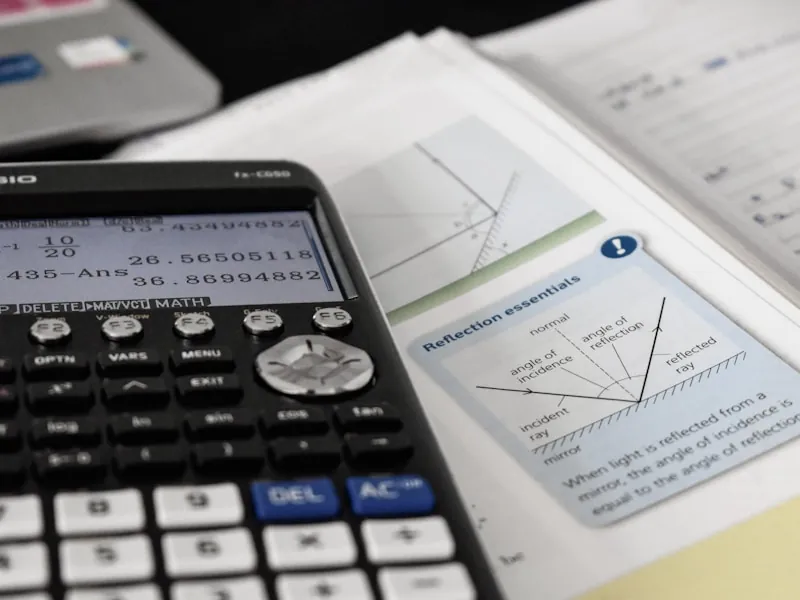
This course extends students' knowledge of functions. Students will investigate and apply properties of polynomial, exponential, and trigonometric functions; represent functions numerically, graphically, and algebraically; solve equations and multi-step problems addressing applications of algebra, trigonometry, vectors, and geometry.
ESL & Languages
10
English as a Second Language, Level 1
This course builds on students' previous education and language knowledge to introduce them to the English language and help them adjust to their new cultural environment. Students will use beginning English language skills in listening, speaking, reading, and writing for everyday and essential academic purposes.

English as a Second Language, Level 2
This course extends students' listening, speaking, reading, and writing skills in English for everyday and academic purposes. Students will participate in conversations in structured situations on a variety of familiar and new topics; read a variety of texts designed or adapted for English language learners; and expand their knowledge of English grammatical structures and sentence patterns.

English as a Second Language, Level 3
This course further extends students' skills in listening, speaking, reading, and writing in English for a variety of everyday and academic purposes. Students will make short classroom oral presentations; read a variety of adapted and original texts in English; and write using a variety of text forms.

English as a Second Language, Level 4
This course prepares students to use English with increasing fluency and accuracy in classroom and social situations and to participate in Canadian society as informed citizens. Students will develop the oral-presentation, reading, and writing skills required for success in all school subjects.
English as a Second Language, Level 5
This course provides students with the skills and strategies they need to make the transition to college and university preparation courses in English and other secondary school disciplines. Students will be encouraged to develop independence in a range of academic tasks.



Simplified Chinese
This course offers students extended opportunities to communicate and interact in the language of study in a variety of social and academic contexts. Students will refine their listening, speaking, reading, and writing skills, as well as their creative and critical thinking skills, through responding to a variety of oral, written, and media texts, including complex authentic and adapted texts. They will explore aspects of the culture of countries where the language is spoken, and will analyse how aspects of that culture are reflected in a variety of texts representing different genres. Students will also broaden their understanding and appreciation of diverse communities where the language is spoken, and develop the skills necessary for lifelong language learning.
